
I’ve been noodling about alternative means of tracking your spells as a player. Probably inspired by Invisible Sun but maybe just original ideas. Really I just like the idea of physical props for the game when possible. Todays entry is about what I call “Geometric Spells”.
Do you remember in elementary school when the teacher would hand out those fun tiles and you’d make a picture out of geometric shapes?
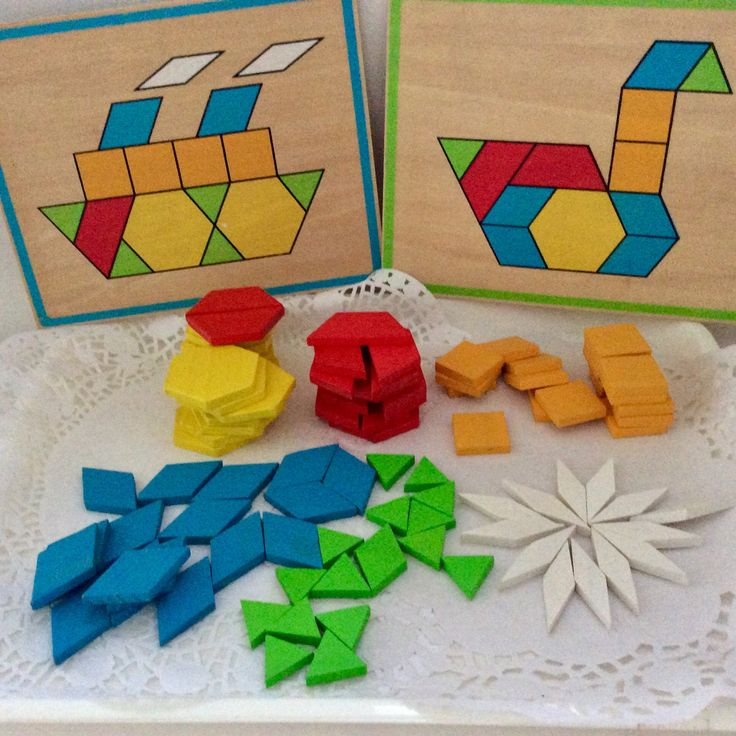
I was thinking this would be a fun system for spells. Envision a D&D 3.5 style game where spells have levels and powers and stuff. But instead of preparing 14 level 1 spells, 8 level 2 spells, and 4 level 3 spells. Spells have shapes and sizes, and your class gives you the repository for spells your prepare. The caster has an open form based on their class. The more “Honest” or “Straightforward” a caster, the easier their shape. A 3e wizard gets squares. A 3e paladin who kind of has maybe has spells, but not many? They get an oval. If you really want a joke class, you can give them a goose or a tugboat or whatever. The area of the shapes should be the same, but one’s going to be a lot easier to fit stuff in.
Classes: Your class determines your grid. This grid is where you prepare your spells. So draw it on a paper with dimensions determined by your level. For a square class, maybe a 2×2 at 1st level, but 3×3 at 2nd, 4×4 and so on. This is probably a chart situation for each class, like the spells per day chart in the 3e phb.
Spell Prep: Each spell is given a tile. To prepare your spells each morning, you put the tile in your grid. You can put as many tiles as you can fit in your grid. When you cast a spell you take it off your grid. There could be features or abilities to let you add more spells to your grid mid-day or on certain circumstance if you wanted too.
Schools: Each school of magic determines the shape of the spell tile. Common schools of magic are more common shapes, like squares. Esoteric schools might have more challenging shapes, like a circle. Some classes would take to some shapes better than others. A class with a triangle grid (Lord of the Undead) could probably make better use of triangles, diamonds and squares (Necromancy, Death, and Conjuration magic), than they could circles, crescents, and crosses (Healing, Nature, and Life).
Spell Level: Just like the tiles are different shapes depending on your school, we would give higher level spells bigger sized shapes. So a level 1 spell might be a half inch by half inch square. Its level 8 partner in the same school would be 4×4 square.
Color: Color of the tiles could also come into play. Maybe you tag spells with sub-schools with different colors so you can tell at a glance this is a figment, but that is a glamour.
Presumably, you’d write the spell name, and some pertinent information on the tile itself, and you could tell quickly and at a glance what you’ve got ready, which spells get that buff to figments you have, and which ones are just regular illusions.
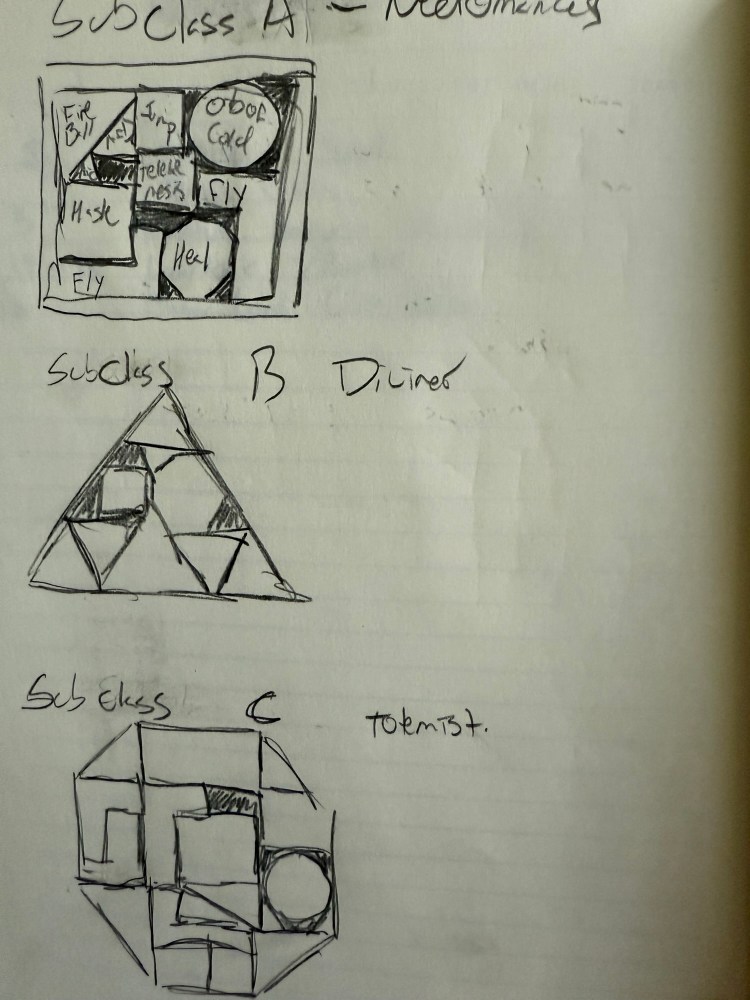
Side Perk: Minmaxing is fun, and hard. In theory you can craft the perfect load out, but by making the player play an actual mini-game at the table, you’re asking them to optimize two distinct things at the same time. Filling the grid, and picking the best spells. Given infinite time, they can probably come up with something perfect, but at the table? Its probably not going to happen. Players can strategize what shapes they like, and how it goes together well, but they have to decide if preparing 13 castings of magic missile is really better than 1 casting of gate for the day. The two things aren’t really equivilent, and maybe you can squeeze 1 gate and 1 magic missile if you rotate this just like that…
 The TTRPG Factory