
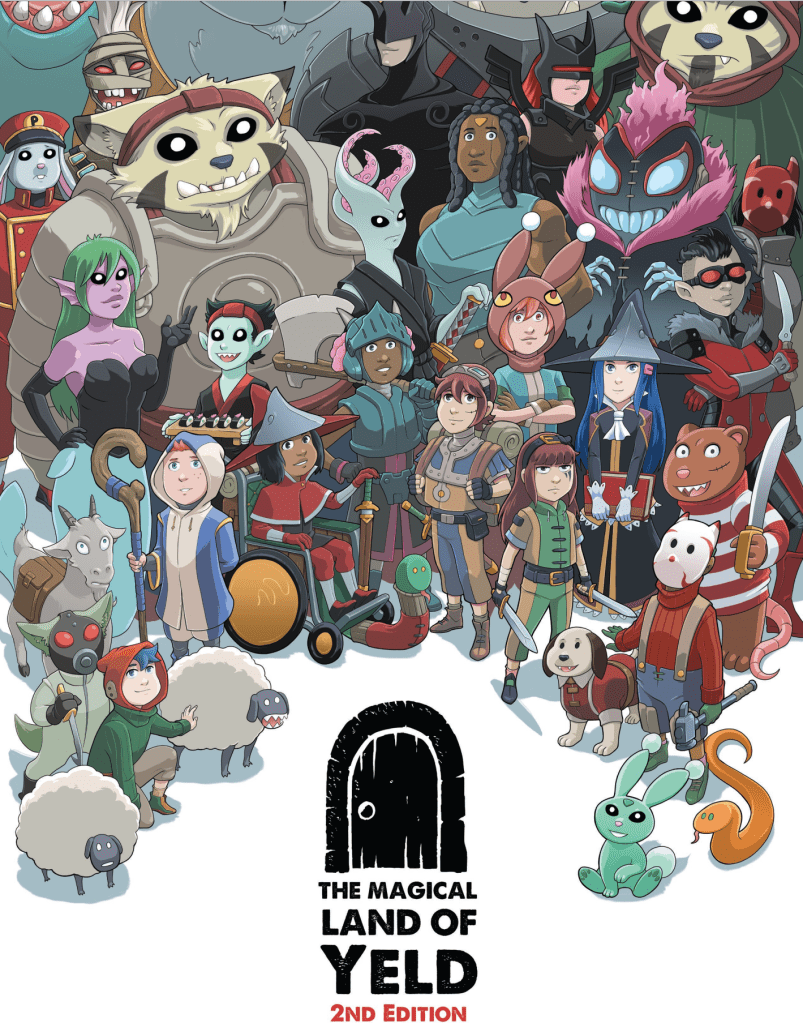
I hadn’t heard of Magical Land of Yeld before, but when Nick and Jake reached out I was immediatley hooked from the art (Pay for artists designers. Seriously). Its got a fun lively style, and seems to live my mantra of “do fun stuff”. Look at the cover of the book, theres at least a dozen characters I want to play or learn more about. So then, they sent me the book and I dug in. This was a 400 page, full fledged RPG in its second edition, and its going to take some time. I’ll scratch the surface, find out the deal with that sweet pink moth guy and the tentacle head dude, and share my impressions about the game overall. After a month of reading, theorycrafting, and *imagination*, hopefully, you’ll get a taste of what this game is.
If you want more to get a feel for the game, check out their live play, discord or they even have a classic web 1.0 webcomic. And lets take a minute, to say hey webcomics are still a thing, I miss those. Bookmarking that now.
The general premise of Yeld is that you’re playing as people who stepped through a magic door, narnia style, and go to play in the magical land of yeld. Then one day, the door to get back is sealed. You’re trapped, but don’t worry. If you can find the 7 magic keys, it might reopen. Its time to go become classic fantasy adventures with the 2-4 of your friends who got trapped with you as you battle through what I call a 13 treasures style campaign. The world is a kitchen sink fantasy setting, with all the cool stuff you want and a bunch of unique cool stuff thrown in.
So lets break this down. Its a full, crunchy 400 page RPG. Theres a lot to discuss.
Who do I play?
You play a kid who wandered through the magic door to Yeld and now you’re trying to get home. I always toss this out when it comes up in games. I get sketched out playing as a kid, but theres no real reason you can’t age them up. And this game is very much geared towards teens, so thats probably only an issue for old Abe Simpson here.
To make a PC, known as a Friend, you start by picking your age. 7-8 get more “restore” or healing rolls each session. 9-10 is balanced, and 11-12 gives more special dice. to reflect experience. You also pick a birthday, which is pretty fun. (or for me, freshman in college, fresh graduate, and old man)

Then you pick a Type. Big Sister/Brother, Rival, Princess, Bully, Baby, Know-It-All, Liar, Brat, Dog (You are literally a dog) each of which adjusts your Core and Special dice (your stats). Pick stats, assign special dice, pick an item from “Home” name yourself and you’re done.
This is a good moment to pause. If you've read the book you know why. They've got a half page devoted to wheelchairs. If you're terminally online, you'll know this is a hugely controversial topic in TTRPG spaces, with some people not caring at all, and others foaming at the mouth at the concept of a wheelchair users on grass. You can guess where I stand, but this is a good litmus test for the rest of the book. It provides pronouns for the NPCs, Many of the NPCs are not white people, many of them have pink hair, and while mostly kids, presumably some of them are gay. If you hate it, fuck off. If you don't care because its just life, enjoy. I kind of hate that I've got to say this for an RPG aimed at teens, but like, *motions to the world*. As you play, theres a bit on becoming a monster that with in world reasoning. Children who’ve come through the door and reach 13 years of age, are magically transformed into monsters, as a byproduct of the world. So there aren’t adult outsiders in yeld. No parents allowed. But the game is very clear, just because you became a monster doesn’t mean you’re a Monster. You’re still the same guy, just now with sweet horns and stuff. Maybe you can keep adventuring, or maybe you find a home somewhere more suited for you.
Later in the book, it talks about your jobs. IMO this probably should be under the making a character section, but I get why it isn’t. They have a formula that seems really fun in their DMing advice section and you aren’t really supposed to get a job until session 2 or 3. But I never do what I’m told (I’ll start my sentances with prepositions thank you very much), and will probably do the kids through doors structure once before I do all sorts of other things with it instead. And (I’ll do it again) in those cases, it would be nice to have the jobs right next to the types so I can have my job on day 1. A nice thing, is that you can swap your jobs periodically, so if you pick one and hate it, change it up. These are your classes, and this is where you get your cool fantasy abilities. Each job gets 5 advancement abilities, and I’ll cover 2 per class.
- Black Mages protect Friends using magic drawn from night, cold, lonliness, and evil. Its the most directly offensive class, and has a lot of temptation towards evil. You get the vibe. They get +2 Smart Dice, and special dice for Black Magic Protection and “I know about Magic”. They can also cast spells using a spell book and they start play with a bunch of them. As they advance they can gain new abilities like “Sacrifice” where you make a dagger attack, and if it kills, you get bonus die to your next spell, or “Maniacal Laugh” where you can laugh and monsters roll less dice against you.
- Freelancer is your Vanilla Action Hero class. Your John McClane sort who doesn’t have fancy magic, and is just good at crawling through vents, fighting people, and generally just peak human capabilities. They get +1 Brave and +1 Smart, and special dice for gamble and trade. Their core ability is Improvise, which gives them a pool of dice they can add to just sort of… whatever they need. As they advance, they get powers like “Looter” which lets them reroll loot tables, or “Karma” which lets them reroll any roll with 3 or more dice and a result of 1.
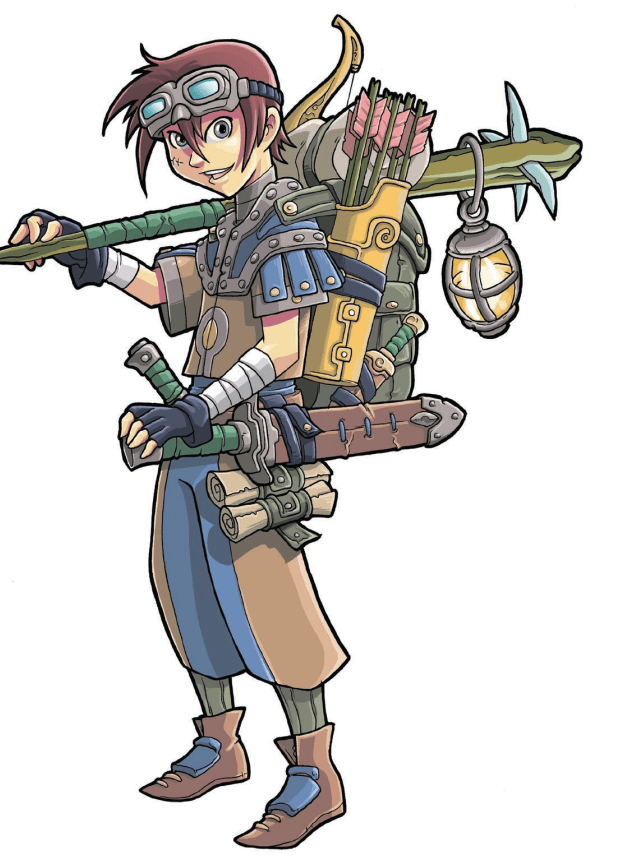
- Oathbreaker, not to be confused with the 5e paladin subclass that sparks internet fights, this Oathbreaker is a paladin/barbarian type who is forced to swear loyalty to the Vampire prince, and fight him anyway. They get +1 Strong and Tough dice and special dice for Charge or Break. Each adventure you swear an oath, and it gives different benefits and drawbacks. As they advance, they get stuff like “Oathbreaker Parade” which means people throw a party when you show up in town, and maybe the town honors you or chases you out depending on its take on your breaking of the oath.
- The Shepherd is your monster rancher class, and they get +1 Brave and Strong with special dice for “First Aid” and “I know about Animals”. Your core thing is the ability to summon a flock of sheep. which is awesome. What can you do with a flock of sheep? What can’t you do. Anyway, as they advance the flock gets stronger, and they can buy powers like “Thump” where they hit people with their staff and stun them, or “Shepherd Song” where they can sing, and your flock and Friends get bonuses to resist spells.
- Soul Thief is one of those Jobs with a sweet, very veery specific themes. I’m for it in games with lots of classes, but sometimes it feels a bit much in games with 8. How many souls are being stolen exactly, and why isn’t anyonee doing anything about it? This one gets +1 Strong and Brace with special dice for “Hide & Sneak” and “See in the Dark”. They get two core abilities. One lets them bank an action when they defeat a goe, and the other gives a benefit when they spend a banked action. Its a fun gameplay loop. As they advance they can get your classic “Backstab”, which lets you move and hide for free after a hit, or “Lightning Strike” which lets you get a big bonus to attacks the first turn each round.
- A White Mage is about the opposite of a Black Mage. They gain +1 Smart and Brave with special dice for “Black Magic Protection” and “I know about Magic”. Just like the Black Mage above. Their core thing is spellcasting, but their spells are buffing and helping spells more than offensive ones. As they advance they get stuff like “Holy Warrior” giving bonuses against Undead, Shadow, or Vampire foes, or “Patience” which adds dice your future rolls that round if you were interrupted.
- Then we have the Witch, which the setting talks a lot about being the evil, curse archbads who ruined everything. But you’re one of the new witches. Which are different, and just a colloquial misunderstanding got you the job title. You do spooky stuff like use brooms and turn into bats, but you’re not a jerk. You get +1 Brave and Smart with special dice for “Fireproof” and “Excuse Me!”. Your ability is a list of curses that trigger whenever you successfully attack. Maybe they get sleepy, sad, sunburned, moldy, or a couple others. Generally some form of debuff. For their special dice, they can take “Magic Potion” to make potions, “Crow Friends” giving you an affinity for birds to help you with stuff. (Seriously, 1/6 times you attempt a challenge, a bird swoops in and helps you). It’s probably the class I’d end up with.
- Lastly we have the Witch Hunter which …. uhhh… hunts … witches. Its an anti-mage who distrusts magic and I’m sure will make for some interesting moments if you’ve got a witch in the party. But they also don’t like white/black mages, so its going to come up with most parties. I’m not a fan of “I dislike other party members” being a class schtick, but it happens now and again (barbarians always get a variant or subclass that disavows spells in D&D). It’s written to be more of a skeptic than a van helsing, but hey the arts pretty clear. They get +1 Smart and +1 Tough, and bonuses to “Tease” and “Smell Magic”. They get two abilities, one forces spellcasters to target the hunter, and the other makes Masks, which protect their identity and ward off magic. There are 4 types, which each ward against different magic. They can grab advancement special dice like “Right to Fire” giving bonuses to hitting people who are on fire, and “Flame on” where you get bonuses to your rolls if you’re on fire. You’re burning witches here. Its played for fun, but also, not really the greatest historical reference. I think its done in a way thats alright, but if you’ve got a couple of practicing witches in your player group, it might be worth an ask.
As you play, you’ve also got advanced classes. After you’ve collected 3 keys, you can take these. Theres the side quest to unlock bit, but thats also one of those things I’d generally gloss over. I’ll skim these faster, but they are all really flavorful. With this many advanced and monster jobs, and 8 core jobs, you’re going to have a lot of combos and options in a party. You probably won’t have too many “Oh good another fighter” moments.
- Drudge Angel – These are basically playable angels of death who get some magic, and powers for Ghosts and respawning.
- Vampire Hunter – Unlike Witch Hunters, this isn’t quite as awkward. You won’t have a vampire in the party, so theres no inherent conflict. This is how you play Van Helsing for real, and you get powers like special staking abilities or beheading of vampires.
- Tax Collector – I love that the pic is a dog for this one. You join a guild, and then whenever you show up to a town, you get to collet money or give them a tax refund. You get free stuff, and better loot, and the class is all about making money.
- Boulder Knight – You are a special knight charged with guarding a meteor that sealed a portal to the Shadow World. Even Dragul sees it as important, and just asks that they don’t fight against him. You’ll be one who fights against him, so you probably can’t go hang around the meteor, and have to adventure instead. These are heavily armored knights, who are all about being strong, and fighting ghosts. They also get some “I’m pardoned by the prince” stuff where evil authority cuts you slack.
- Junk Hound – This is your crafting mini-game player. The one who knows how many feet of rope they have and if they can tie it some poles to build a raft. Its all about modifying gear, and has a list of mods they can add based on parts. This advanced job is twice as long as the others for context.
- Ghost Keeper – Remember, you play as ghosts a lot here, and you encounter them all the time. This class emphasizes that, and can talk to ghosts or do ghost stuff themsleves.
- Red Mage – Now we are talking. This is your battle mage class who is pure offense in a very straight forward way.
- Warrant Mage – A bounty hunting wizard, who can gain benefits from tracking down and catching/defeating specific foes.
Monster Friends – Yup, you can become a monster. There are monster jobs, and you know what I’ll take once I’m eligible.
- Oracle of the Serpent God – You get oracle powers, but you’re also untrustworthy and a snake. Its a fun combo where you get deception powers and i get special knowledge powers. I get Destiny vibes, and thats probably how I’d play one.
- Magic Eater – You eat magic. You’ve got to if you want to survive, but in practice, you can do weird gross shadow stuff and get benefits from eating spells or magic.
- Hunter in Darkness – This is your dark goat of the woods, dark, evil fey type. You become an evil twisted satyr type, and spook around the forests.
- Deep Mage – For your cthulhu cultist player, and it comes complete with a requirement that you lend power to the Deep with perks for doing it, and penalties for not doing so.
- Werewolf – What it says on the tin. You’re a werewolf. Have fun.
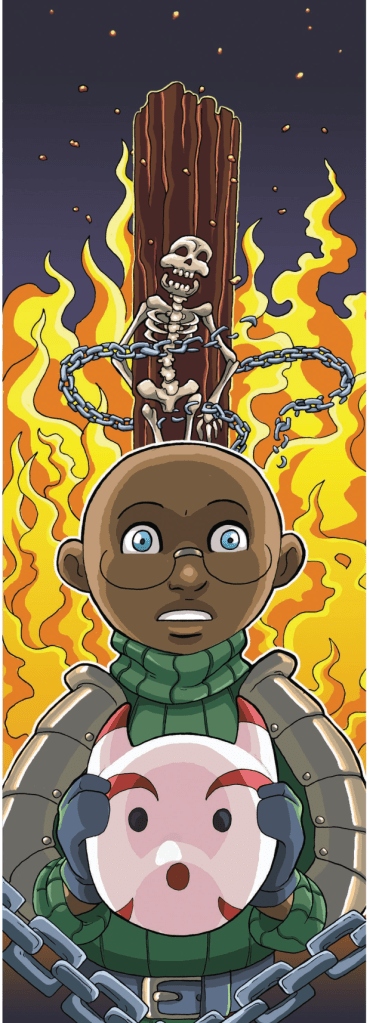
- The Black Casket – You are a ghost who lives in armor. Its sweet, like that guy in full metal alchemist. The art for this ones pretty sweet, unlike the FMA guy, your ghost is visible.

- Vampire – Well alright, I guess the Vampire Hunter might have some conflict with the party. You can be a vampire, and you get vampire powers.
- Root Warden – You get haunted tree powers. You start growing branches and stuff, and get a collection of spooky, lorax themed powers.
- Hunter of Yeld – This is a secret bad guy job, where you sign up to work for Dragul, but only because you want to make sure he doesn’t hurt your friends. Its in another chapter, hidden in the adventue.
Something I’ll call out that I love, but will absolutely not be going through. There are pages and pages and pages and pages of loot, magical and mundane. You’ve got your classic stuff like the Calamity Angel, a big old thrown polearm that gives extra damage, but its also got stuff like a whole chapter on Cozy Sweaters, or this sweet surf board. Again, lets have some fun.

Where do we play?
The magical land of Yeld of course. Your band of Friends wanders through a magical door connecting the real world to Yeld, a wonderous world full of adventure, and monsters.
Yeld is your traditional fantasy world, in that its pseudo-European mideval/renisance ascetically, Bronze Age greece culturally, and governed with a modern political system. To be more specific, there are lots of kingdoms, towns, and isolated communities who do things like chop wood for a living and get raided by bandits if the local lord isn’t paying attention.
The world of Yeld has a classic multi-chapter fantasy setting. I’ll let you learn and explore it on your own. It does a good job of explaining why there is magic, why people need to adventure, whats going on, and all that. You’ve got the 4 preceeding eras, dragons, a rebellion, free cities opposing Dragul, and more.
Yeld is inhabited by a wide variety of creatures. You’re playing human kids from the real world, but you can encounter a good variety of sentient, friendly-ish monster people. And not your classic elf, dwarf, orc stuff.
- The Kings People look human, but have pointed ears. They are the most common people, and apparently way back in ye olden times, also came through the doors. Dragul isn’t nice to them, and these are your peasants who need to hire adventurers (Friends/PCs) to save them from stuff. Or maybe they need to be rallied to overthrow him. The King’s People are everywhere living alongside fairies, mermaids, vampires, animals, and others. Some are even loyal to Dragul.
- Fairies aren’t what you think. They are big, furry, with dark white and black fur with sharp teeth. They are warlike, and conqurers, but since they haven’t been super successful with that, they mostly live in other societies, often taking martial roles. Fun fact, they are single sex and lay eggs.

- The Animal Tribes are not Native American pastiches, like a lot of settings. In Yeld, they are literally tribes of animals. The Art is a fox, on all 4’s dressed like robinhoot or an aligator with a charm bracelet.
- Mermaids are really fun looking, with sweet fin ears, black eyes, and a variety of cool colors. They live, well, in the water, but can come out growing legs to do so. They have a really cool vibe as “the misunderstood bad guy” race that’s kind of awesome, and they were made by The Deep. They are mostly woman or gender fluid, most are lesbian or bi, and most importantly they smoke like chimeny’s. Its got a whole paragraph about how the Prince bribes them with his personal brand of cigarettes, and it really completes the hot goth chick from high school vibe. Anyone up for some Vampire the Masquerade? Anyway, smokings bad for you don’t do it. Unless you want to be cool.
- Yeld’s Goblins are fun. Apparently they are just there. They are weird little monster guys, who wear gas masks, and do steam punk stuff. People love goblins because they love parties, and are mostly chaos goblins. Rumor has it they might come from the moon and clone themselves.
- Toothfacers are one of the best names I’ve seen in a bit. No one really knows where they came from, maybe a witch did it, but essentially ghosts get trapped in burlap sacks full or organs and insects. Basically Oogie Boogie guys with a teeth obsession.
- Vampires in Yeld aren’t quite the same as the real world. Dragul introduced the concept to the world, and they can be made from Mermaids, the King’s People, and sometimes animals. They eat flesh and drink blood, and are usually evil, but could get by eating cows or something. They look like vampires, but your players being from the real world could give some misconceptions. They can walk around in sunlight for example, and while they don’t really like holy symbols they don’t mind garlic at all.
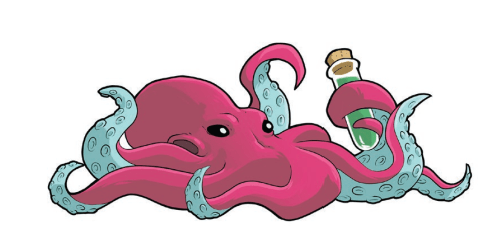
- Squidfolk are the name for that sweet squid guy on the cover. Its original. I’m for it. These are sort of a proto-type creation of The Deep before it made Mermaids, which I love conceptually. Especially with how goofy these look. After The Deep made Mermaids, there was no use for these, so they hang around building boats and awkwardly chilling in coastal towns.
- Pi-Rats are exactly what you think they are. Pirate rats. Of course you want to play one. Fun fact, there are only 43 Pi-Rat names and both genders look the same. So you know theres some fun hijinks there.

Lets talk regions. Yeld has a lot of them, and as a kitchen sink, you can got to a lot of interesting places. Most get about a page with some art, which IMO is about all you want to give a DM when explaining your setting. Give me the gist and let me fill in the blanks.
- The Fairylands is the oldest, and a mystery. Fairys live there, and most folks don’t know who to get there. It might be impenetrable jungles, but the fairys won’t go into it. Its sort of an inverse Valinor situation, where the fairies who used to live there can never go back because they chose to go to Yeld.
- The Empire of the Leviathian Queen sounds like my kind of place. An ancient queen worked with dragons to harness the power of winter, and then journey to a safe kingdom protected by leviathan knights. Sounds very epic.
- Loh Tabeth gets one of the longer entries, and it was originally the main “good guy” city. It was the first settled by the kings and queens of old, a sanctuary for new settlers, and unfortunatly corrupted. The queen and her people left, and the king and his peoplee built giant crystal palaces. 9 generations ago. Now its monsters and giant crystal ruins, which is a pretty cool vibe.
- The Shadow World is a dark echo of Yeld. Its your shadowdark, ethereal, dreamland, astral plane, sort of place. It started as a mirror image of yeld, but was slowly tainted by witch magic. Which I haven’t mentioned yet, but is a theme through the setting. Stuff was good, then it gets tainted by witch magic, and now things aren’t so good and there’s a vampire prince running around.
- The Arsenal of Winter is a place as much as it is a thing. It gets referenced a lot, but its one of the more sci-fi gonzo parts of the setting. Like all good TTRPG settings, its pseudo-mideval, but also theres a secret sci-fi far future tech behind the scenes. In the deep and distant future, humanity has left earth behind and found a space alien thing. It was a big computer thats been running since the dawn of time and goes through the end, looking at alternate realities. This is one of those elements in the game that a few NPCs will mention and it will be Weird, and maybe after a couple of campaigns a player digs in and you get to do the “Actually its robots suprise” bit as a DM that are really fun when you’re not expecting them.
How do I play?
Yeld is a dicepool game using D6. The game mechanics break dice down into Core Dice, Special Dice, Weapon Dice, and Armor Dice, but its always a D6. Sometimes you get to roll a core die and a special die, and sometimes a weapon and core. Depends on the task. Some other times, you can borrow dice from friends, and add to your bonus.
- Core Dice are your stats. You might have a Strong Die, Tough Die, Smart Die, or Brave Die, and youll get to roll them. You start play with 1-3 of each core die, and get 2 more when you pick a job (class).
- Special Dice are your skills or powers. You may have a Special Die for climbing, and then when you need to climb something, you get to add your Special Die.
- Armor and Weapon Dice are rolled to defend. You’ll roll tough and armor to defend and weapon+core to attack.
Die rolled are added together. So I add my 3d6 and get a resule, compared to the target determined by DM.
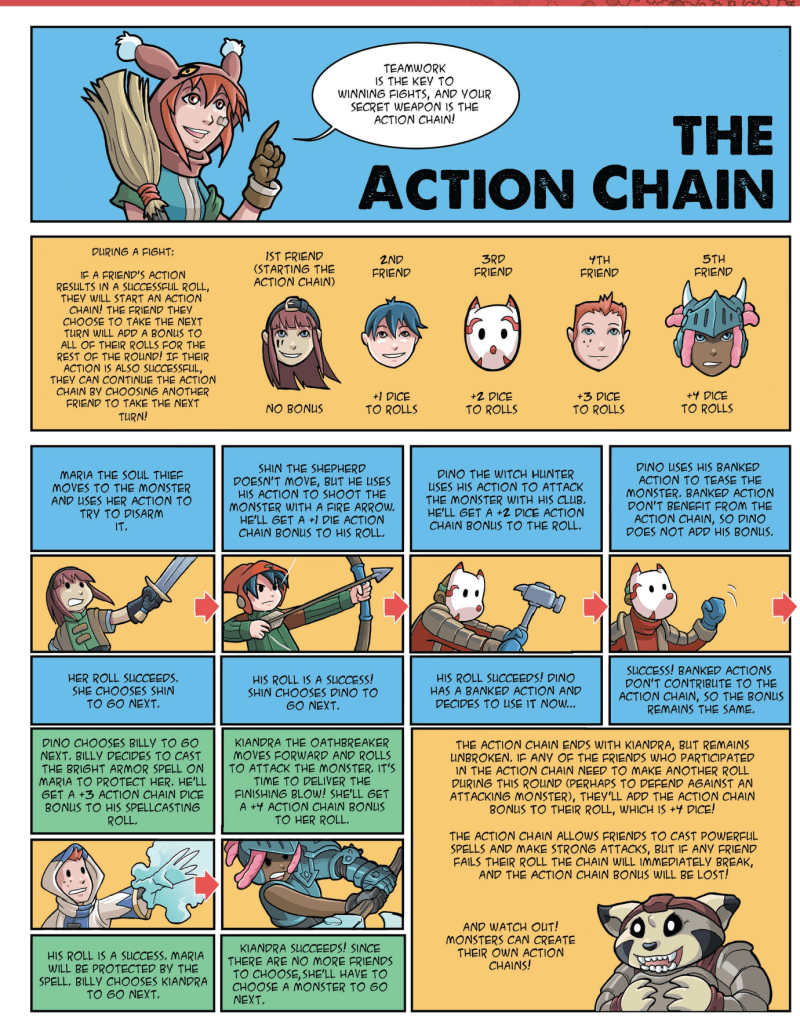
Broadly, the spirit of the rules is the players narrate what happens, unless the DM challenges it. So when you say “I climb a tree” you do. Unless the DM says “Wait thats a hard to climb tree, roll a strong/climb check. I’m very in favor of these style games, where the players tell the story and the DM interrupts. Its way more engaging as a player, and less work for a DM. They do a really good job of making it easy to play, and one clever thing they do is the comic book style instruction sections. They make it fun, easy to read, and clearly explain the mechanics way better than a paragraph.
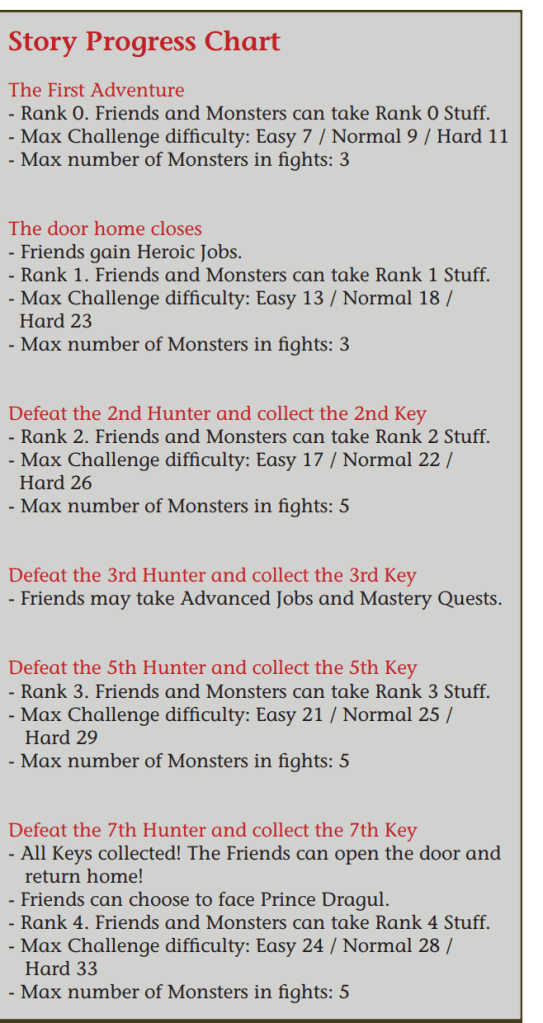
The game gives a structure for your campaign and kind of walks you through the introduction. Session 1, you’re going through the door, showing up in the woods and battling a monster. Session 2, you finds a town, and do some exploration. Then, you’ll meet a mentor, or someone from Yeld who can send you on quests and help you get home. The mentor very specifically will tell them that Yeld is a magical land ruled by a cruel vampire prince Dragul. The Hunters of Yeld are powerful lieutenants who control a region of yeld. The door will open if you can defeat the 7 hunters and steal their key. You’ve got to get a job. Jobs give you magic powers, not crippling back pain and carpeltunnel, so thats nice.
How do we fight?
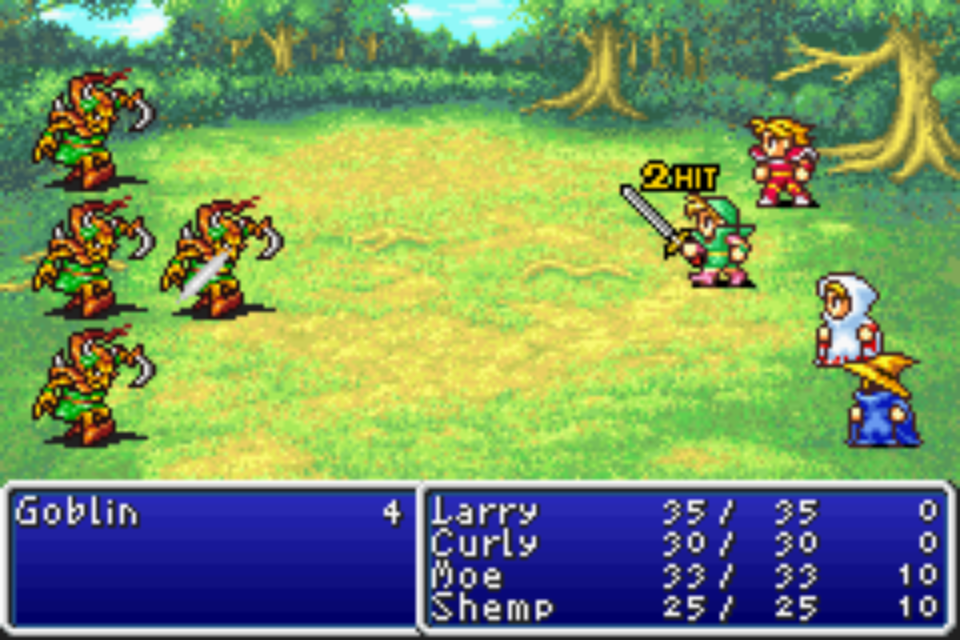
Its a swords and sorcerery fantasy RPG. You’re going to fight stuff. This one literally recommends a chess board, or Action Board. Then you do a Final Fantasy style two lines of opposing forces battle each other in turn based order. Its not as free form as other RPGs, but its also a lot easier to run and play by the same measure.
One fun note, they make a point to provide options that aren’t just slaughter. A battle can end with monsters killed, captured, retreated, surrendered, or even befriended. Each gives different outcomes, and it really drive the idea that just because you’re fighting, you’re not killing one another. Which more games should push. Not everything has to be life and death, and in heroic fantasy, heroes often layb exhausted after a fight chatting with the villain. When a Friend dies, they get to become a ghost. They have limited powers, and can still play a bit until they are restored.

The Action Chain. This is another big, unique thing Yeld brings to the table that seems really cool. When in a fight, a Friends action is successful, they start an action chain. That Friend then picks another Friend to take their turn, but they get +1 Dice. If they are successfull, they pick the next Friend who takes their turn with +2 Dice and so on until everyone takes a turn, continuing to scale until someone fails. Pay attention on someone elses turn, you might be next, and you might get a buff. Oh, and monsters get to do it too….
Overall

Theres not really context for that picture. The books just full of it.
Frankly, the art on this book tells the whole story. If those two pictures get you excited and amped, this is the game for you. If you roll your eyes, and take yourself really seriously, you probably ought to pass. Its a really, really well made game. The only question is, do you like it? Thats a personal one for each of us, but I know where I stand.
 The TTRPG Factory
One thought on “Yeld 2e: Review”