
Forgotten Fate is a reaction to the not-6e revision of 5e D&D released in 2024. We all have our gripes with 5e, some more than others, but as fans of the game, we can’t help but try to fix it. Thats 90% of whatg this site is afterall, and we’ve seen other products attempt to do a similar similar thing, like Level Up. Why? Whoever solves the problem, gets to be the next Pathfinder 1e, turning into a smash hit. While we watch not-6e sort of become the 4e essentials line up. A game that gets published, and some people play a bit here and there, but really? No one cares.
Forgotten Fate was written by Derek Garcia, of ScreenRant, and stands out from the pack by having a clear vision of what it’s changing and why. Plenty of these revisions declare that they fixed 5e, or add quality of life changes, or will be the groundbreaking revision we’ve all been asking for since 2018, but then don’t deliver. Derek breaks down the changes, why he’s made them, and they seem to get to the heart of the issues. It’s not just getting some power a level earlier, or adding a +1 here or there, this is a real ground up rebuild that keeps the essence intact, but really stands out because it put the work in. Derek isn’t some big studio, or even really a small studio like MCDM, but thats his competition, so that’s what we are going to compare it against. These full system rebuilds are big swings, and the one that hits will pay off big. Draw Steel, Daggerheart, and the rest miss the mark pretty hard. The solo guys like me are spot fixing random stuff that annoys us personally, but Forgotten Fate is really the first to do a true, honest, and decent 5.5 (its even marketed as 5.25).

The elevator pitch hooks me immediatley. The world has a predestined “good ending” where a good triumphs over evil, and everyone goes to heaven, with a twist. A second evil god intervened, and messed that all up before the settings overgod settled things down. Unfortunatley, setting things down, was essentially a hard reset. Memories, language, history, culture along with the obvious buildings and castles, were destroyed and life was reset to a blank slate. There’s the obvious PC hooks of “Find out who I was” or “I live in a mansion let me make sure I settle things down” but you can throw in a couple of “I am a street urchin but apparently have a symbol of the old king. Am I secretly the king, did I steal it from the king, and if so, can I claim a kingdom somewhere?” or “wait why do you want to kill me again?”
Its a bit heavy handed, but it works really well to put the players at the front of the story. There’s not a ton of lore to learn, as a player. It goes back 50 years. Plenty of people presumably know that they don’t know anything older than that. Traditions are gone, and people are forging a new world. The real stand out though, and what makes Forgotten Fate unique, is that most of the Old World was your classic fantasy, but some places had more renaissance themes with firearms and cannons. Others? They have cars, and computers, and the like. Apparently some parts were a really modern, giving me Thundarr or The Dark Tower vibes. Its a good framework. Players can build whatever, and you can just say “Sure you can be from a place like that” and its not that much of a stretch.
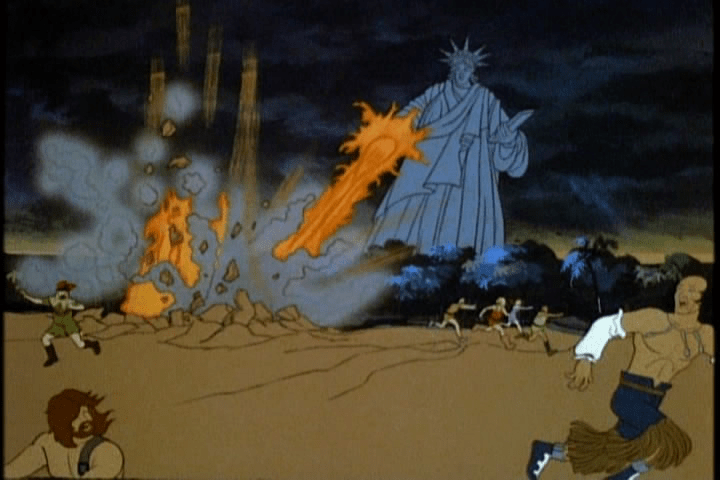
The latter half of the book is dedicated to the setting, and this is where your lore lies if you’re after it. The DM ought to know it, and your eager players will want to know it, but the back of the book is the right place. Most people are players, and most players wan’t to get into it. The settings tabula rasa approach is nice, in that you can put it over any existing campaign setting you want. Forgotten Realms? Swap Kenoma (Fate’s prime material) for Toril and change a few proper noun names, done. But thats the surface. Running a Vampire the Masquerade and ready to mix things up hard? Evil god returns wipes the slate. Regain your memories, and establish your place in this new post apocalyptic world (Guess I’m running a Loaded Bible campaign). Thats probably not the intent, but a good setting should inspire tons of ideas, and this does. What was the world like, and who were you? Those are really fundamental, powerful questions, and they are at the center of any Forgotten Fate campaign.
The book opens with a chapter on rules. This is mostly a reprint of the 5e 2014 rules, and it probably would have been better served getting cut. Instead, we should have more sections like the paragraph of when and why to apply advantage and how to roleplay it for a Forgotten Fate campaign. Then a small list of call outs to important and notable changes. Even as someone reviewing the game, its hard to get motivated to comb through this portion hoping to catch small changes that may or may not exist. I can’t imagine players will either.
There is new content though, alongside piles of rules tweaks and suggestions, we get a couple of new feats, items, and lore. Each class gets a new subclass. Some, like the barbarian or druid, bring Kenomian lore to the front and center, and others, like the fighter or monk, are just kind of fun options. We get a new race, the Orama, who are small sized, humans whose eyes are replaced with glowing orbs. They don’t actually get much mechanically, but the lore is nice. I find when introducing homebrew races to players, and thats what this essentially is, you need to make it way more powerful than official races. Otherwise, no one actually picks it, and we end up with a bunch of humans, elves, a dwarf, and maybe one exotic thing from the wrong setting you reluctantly allowed. Or maybe a tiefling. There is also a new class, the weapon master. Its a revision of the 3e TOB martial, and while the fluff is comparable to most fighters, the mechanics seem fun. If you’re interested in a fighter type with more options, this is the way to go. A lot of the new mechanics and rules here are easy to slot into other games. I keep bringing that up, but its really key. The ammount of people running a Forgotten Fate campaign is probably relatively low. But the ammount of people buying the book, because they want to play a Orama Weapon Master.
In Kenoma, each of your classic fantasy races gets a write up, which is actually pretty important. Normally a player should probably skip the lore about the ancient elven empires, and how king correlleon chopped off some dudes eye, or whatever.
In this though, ancient history is like, 51 years ago. Your elf was alive for it. How do they feel about it? For example, dwarves are a fantasy trope, and usually long lived. We keep the stubborn, unchanging, “Old ways” tropes of dwarves, but a dwarf who doens’t know the old ways is interesting. What were they? Instead, we get dwarves who are practical and functional. They take roles in communities based on function, and service to the whole. Elves? The longer lived race. Well they have apparently stopped aging alltogether. What does the longest lived race do when it lives forever? They become insular, and resentful, thats what. They “used” to accumulate massive wealth thanks to compounding interest and investments, sit on it, then when they retire/die give a ton of cash to their next in line. The next of kin could wait, because they’d live ~forever and know they will be taken care of. But now? They live Forever. There is no passing of wealth, and there is no community. Elves come first, and among them each individual elf is looking out for themselves. Obviously elves don’t have to be bigots in setting, but you know… no one has to be a bigot. People choose to, and a lot of elven culture seems to drive that way. You’re core 5e races get write ups, and we add in living constructs the Insomni, of which there are exactly 50,000 produced so far. I love robots in a setting, but I’m not sure why we are doing the same thing as Eberron and saying there won’t be more made. Why can’t I play one right off the assembly line, or find an evil dude in a bunker somewhere making a silly number of them? I get the answer is “the story” but I prefer open ended stories that allow for a yes and, and not a no but.
I like to touch on layout and art in my reviews, because I really do believe that this is what gets people to sit down and play your game. When the DM tosses Mork Borg onto the table, people are excited. When he sends a copy of the ashcan edition in .txt format, no one cares. Same game, different presentation. This is the big failing in Forgotten Fate. A lot of the rest of the game is subjective. Is it fun, does it sound cool, am I inspired? But the lack of pictures in the book is pretty bad. There is cover art, and thats it. It’s a glaring omission and stood out by my 8th or 9th page, wondering when I’d get a page break. The layout is also tough. Its got a great table of contents, but as you try to read the book, the section breaks aren’t clear. I’m often reading about spellcasting and magic, when I finish the part on combining magical effects, only to jump into a bit on wildshape, and then back to magic damage types and sample spells. The whiplash effect came up a bunch, and really takes you out of it. I found myself going back to see what section I was in, and if I skipped a page or something. Some nice headers, page breaks, or some more effort on layout would have gone a long way.
There are some great ideas hidden throughout Forgotten Fate. Some innovative mechanics, some new takes, and some interesting ideas to flesh out gaps in 5e. I’d recommend they hire an editor, and cut this whole thing down to 120 pages, get some art off Fiverr (I know multiple RPG designers who use this for their work), or the public domain (like cheap-ass me) if you have to, and they will probably have a hit in the 2nd edition. Otherwise, its probably worth mining for ideas and putting on the shelf next to the others.
 The TTRPG Factory
One thought on “Forgotten Fate: Review”